
The Convergence of Art and Innovation: When a $100K Robot Dog Meets Beeple, Elon Musk, and Picasso
Key Takeaways
- Beeple’s $100K robot dog project signifies a profound shift where advanced robotics transition from utilitarian tools to objects of artistic and cultural significance, reflecting broader societal integration of AI.
- The event highlights the increasing valuation and relevance of digital assets and NFTs, emphasizing new ways value is created and exchanged, with significant implications for brand engagement, content monetization, and intellectual property.
- Strategic use of cultural icons like Elon Musk and Picasso demonstrates the immense power of brand association and narrative building, transforming an artwork into a cultural artifact that resonates deeply with audiences.
- Businesses must embrace cross-disciplinary innovation, invest in emerging technologies like AI and blockchain, and recognize that digital transformation extends beyond efficiency to redefine value and create new business models.
- The future demands ethical leadership in AI and robotics, as these technologies become active participants in our lives, necessitating responsible innovation to build trust and shape an equitable digital future.
Table of Contents
-
- The Robot Dog: More Than Just a Pet
- Beeple and the Digital Art Revolution: Redefining Value in the Digital Age
- The Power of Persona and Cultural Resonance: Elon Musk and Picasso as Touchstones
- Business Implications: Lessons from the Intersection of Art and Tech
- Comparison of Robotic Platforms for Creative/Experiential Applications
- The Future: AI, Robotics, and the Human Element
- FAQ
- Conclusion
In an era defined by rapid technological advancement and an ever-blurring line between the digital and physical realms, certain events capture the zeitgeist, forcing us to reconsider the boundaries of art, technology, and commerce. A recent, striking example comes from the world of digital art, where the renowned artist Beeple (Mike Winkelmann) has once again made headlines. His latest venture, featuring him putting his face on a $100K robot dog positioned alongside figures like Elon Musk and Picasso, which subsequently sold first, is not just an artistic statement but a profound commentary on the evolving landscape of innovation, value, and our collective digital future.
This singular event, while seemingly niche, unravels a tapestry of interconnected themes crucial for business professionals, entrepreneurs, and tech-forward leaders to understand. It speaks to the maturation of robotics, the explosion of digital art and NFTs, the power of brand and persona, and the innovative ways in which these elements are converging to create new markets, redefine asset classes, and drive digital transformation across industries.
The Robot Dog: More Than Just a Pet
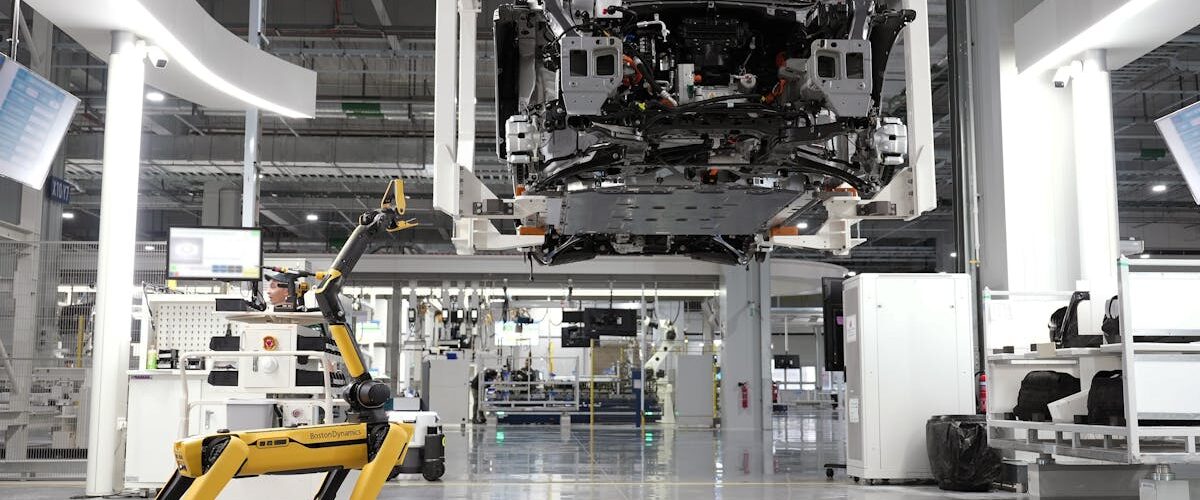
The robot dog itself is a marvel of engineering, a testament to the incredible strides made in robotics over the past decades. From the factory floor to specialized exploration missions, robots are increasingly sophisticated, capable of intricate tasks, dynamic movement, and even rudimentary interaction. The Boston Dynamics “Spot” robot, often referenced in such contexts, has moved beyond industrial inspection and military applications, finding its way into public demonstrations, artistic performances, and now, high-concept art installations.
What Beeple’s project highlights is the transition of advanced robotics from purely utilitarian tools to objects of artistic expression and cultural significance. This shift is not merely aesthetic; it reflects a broader societal integration of AI and robotics. Businesses, historically focused on leveraging robots for efficiency and automation in manufacturing, logistics, and healthcare, are now contemplating their role in customer experience, brand engagement, and even creative endeavors. Imagine robotic assistants in retail, AI-driven art installations in corporate lobbies, or automated performance artists redefining entertainment. The robot dog, in this context, becomes a symbol of this pervasive technological creep into every facet of human activity, including the highly subjective world of art.
Expert Take:
“The move of advanced robotics into artistic and cultural spheres signals a profound shift. It challenges our perceptions of technology’s role, from purely functional to deeply expressive, opening new avenues for innovation in human-robot interaction and brand storytelling.” – Leading AI Ethicist
Beeple and the Digital Art Revolution: Redefining Value in the Digital Age
Beeple, whose real name is Mike Winkelmann, is no stranger to making waves in the art world. He famously sold an NFT for $69 million in 2021, catapulting digital art and Non-Fungible Tokens (NFTs) into the mainstream consciousness. His latest robot dog project, an intriguing hybrid of physical and digital art, further solidifies his role as a vanguard in this space. It underscores the continued relevance and increasing valuation of digital assets.
For business professionals, understanding the NFT phenomenon and the broader digital asset market is no longer optional. It’s about recognizing a fundamental shift in how value is created, owned, and exchanged in the digital economy. NFTs provide verifiable ownership of digital items, ranging from art and music to virtual real estate and collectibles. This has profound implications for:
- Brand Engagement: Companies can create unique digital collectibles, loyalty programs, or metaverse experiences powered by NFTs, fostering deeper community engagement and customer loyalty.
- Monetization of Digital Content: Artists, creators, and even media companies can monetize their digital creations directly, bypassing traditional intermediaries and unlocking new revenue streams.
- Intellectual Property Management: NFTs offer novel ways to track and manage intellectual property rights in the digital sphere.
- New Business Models: Entirely new businesses are emerging around the creation, curation, and trading of digital assets, from NFT marketplaces to metaverse development studios.
The $100K sale of the robot dog, likely incorporating a digital element or tied to a digital asset, exemplifies how collectors and investors are increasingly willing to pay significant sums for unique digital-physical hybrids. It’s not just about the tangible object; it’s about the narrative, the creator, the rarity, and the verifiable digital ownership that often accompanies such pieces.
The Power of Persona and Cultural Resonance: Elon Musk and Picasso as Touchstones
The inclusion of names like Elon Musk and Picasso in the project’s description is a deliberate and brilliant stroke by Beeple. It immediately elevates the piece by associating it with figures who represent different pinnacles of human endeavor:
- Elon Musk: The quintessential tech visionary, entrepreneur, and disruptor, embodying the future of AI, space exploration, and electric vehicles. His presence symbolizes the cutting edge of technology and the audacious spirit of innovation.
- Pablo Picasso: A titan of 20th-century art, representing groundbreaking creativity, artistic revolution, and timeless masterpieces. His name grounds the piece in traditional art history, creating a bridge between past and future.
By placing his robot dog, adorned with his own face, alongside these cultural giants, Beeple isn’t just selling an artwork; he’s selling a story, a concept, and a position within the ongoing dialogue between art, technology, and society. For businesses, this highlights the immense power of:
- Brand Association: Strategically aligning products or services with influential figures, cultural movements, or aspirational ideas can dramatically enhance perception and value.
- Narrative Building: Every product, service, or innovation has a story. Articulating that story in a compelling way, especially through the lens of cultural relevance, can differentiate offerings in a crowded market.
- Cultural Marketing: Understanding and tapping into current cultural currents, memes, and influential figures can create powerful, resonant campaigns that connect with target audiences on a deeper level.
The “sold first” aspect further underscores the demand for unique, culturally resonant pieces that sit at the intersection of emerging technologies and established artistic credibility. It’s a signal to marketers and strategists that the unconventional can often be the most compelling.
Expert Take:
“In an attention economy, cultural resonance is gold. Leveraging the archetypes of innovation (Musk) and timeless artistry (Picasso) transforms an object into a cultural artifact, demonstrating strategic branding in its purest form.” – Digital Marketing Strategist
Business Implications: Lessons from the Intersection of Art and Tech
The Beeple robot dog saga offers several critical takeaways for business leaders navigating the complexities of the modern digital landscape:
- Embrace Cross-Disciplinary Innovation: The most groundbreaking innovations often occur at the intersection of seemingly disparate fields. Art inspires technology, and technology enables new forms of art. Businesses should foster environments that encourage collaboration across departments and disciplines, seeking inspiration beyond their immediate industry. This leads to novel solutions, products, and services that disrupt traditional markets.
- Understand and Invest in Emerging Technologies: Robotics, AI, and blockchain (the underlying tech for NFTs) are not distant future concepts; they are here, shaping current markets and creating new opportunities. Businesses need to actively monitor these technologies, understand their potential impact, and strategically invest in R&D or pilot programs to stay competitive. This could mean exploring AI for operational optimization, blockchain for supply chain transparency, or robotics for enhanced customer experiences.
- Digital Transformation Beyond Efficiency: Digital transformation is often framed in terms of efficiency gains and cost reduction. While vital, Beeple’s work reminds us that it also encompasses redefining value, creating new forms of engagement, and exploring entirely new business models. It’s about leveraging digital tools not just to do old things better, but to do entirely new things.
- The Power of Scarcity and Uniqueness in a Digital World: In an age of infinite digital replication, NFTs and unique physical-digital hybrids derive immense value from their verifiable scarcity. Businesses can apply this principle to create premium, limited-edition digital products, exclusive experiences, or unique brand assets that leverage the perceived value of rarity.
- Forecasting New Market Demands: The rapid sale of the robot dog indicates a growing appetite among consumers and collectors for items that embody innovation, artistic expression, and technological prowess. Businesses that can anticipate and cater to these evolving demands, whether in luxury goods, entertainment, or specialized technology, will gain a significant competitive edge.
- Operational Optimization through Advanced Robotics: While the robot dog is an art piece, the underlying technology has immense practical applications. From automating dangerous tasks in manufacturing to providing precise assistance in healthcare, advanced robotics enhances safety, precision, and efficiency. Integrating AI-powered robots can lead to significant operational savings, improved quality control, and the ability to scale operations more flexibly.
Comparison of Robotic Platforms for Creative/Experiential Applications
The creation of the Beeple robot dog piece speaks to the versatility of advanced robotics. Different robotic platforms offer varying capabilities suitable for artistic, experiential, or even commercial creative applications. Here’s a comparison of some common types:
| Feature/Platform | Quadruped Robots (e.g., Boston Dynamics Spot) | Industrial Robotic Arms (e.g., KUKA, ABB) | Humanoid Robots (e.g., Atlas, Ameca) | Collaborative Robots (Cobots) |
|---|---|---|---|---|
| Pros | – High mobility, navigation over diverse terrain – Dynamic balance and agility – Capable of complex sensor integration (vision, LiDAR) – Evokes biological forms, engaging |
– High precision and repeatability – High payload capacity – Established safety standards – Wide range of end-effectors for varied tasks – Robust and durable for continuous operation |
– Human-like form factor, relatable – Advanced dexterity and manipulation – Potential for complex social interaction – Ideal for human-centric environments – Capable of expressive movement |
– Designed for safe interaction with humans – Easy to program and reconfigure – Flexible and adaptable for varied tasks – Lower cost of entry than heavy industrial robots – Good for small to medium businesses |
| Cons | – High cost and complexity – Limited upper body manipulation – Public perception can be mixed (uncanny valley, military ties) – Energy intensive, battery life limitations |
– Fixed base, limited mobility – Requires specialized programming expertise – Can be large, heavy, and require safety cages (traditional models) – Less intuitive for non-engineers |
– Extremely high cost and R&D – Limited battery life – Reliability and autonomy still developing – Potential for “uncanny valley” effect, off-putting to some – Ethical and safety concerns are paramount |
– Lower payload and speed limits than industrial arms – Not suitable for heavy-duty, high-speed tasks – Still requires some programming knowledge – Safety considerations need careful planning in shared workspaces |
| Use Case Suitability | – Art Installations: Dynamic, interactive exhibits – Performance Art: Robotic dancers, actors – Exploration/Inspection: Remote sensing in hazardous environments (can be artistic backdrop) – Brand Activations: Engaging product demonstrations |
– Sculpting/Fabrication: Precise cutting, welding, painting of complex forms – Automated Installations: Moving and arranging heavy art pieces – Interactive Displays: Controlled movement of display elements – Robot-assisted painting/drawing |
– Entertainment: Realistic performers, greeters – Social Robotics: Human-robot interaction exhibits – Conceptual Art: Exploring the nature of humanity, AI, and consciousness – Brand Ambassadors: Engaging visitors at events |
– Interactive Art: Guiding visitors, handing out objects – Small-Scale Installations: Assembling modular art pieces – Educational Displays: Demonstrating robotic principles – Artist Collaboration: Assisting artists with repetitive tasks |
The Future: AI, Robotics, and the Human Element
The Beeple robot dog is a microcosm of a much larger trend: the inexorable march towards a future where AI and robotics are not just tools but active participants in our creative, economic, and social lives. The ethical considerations surrounding AI and advanced robotics are paramount. As these technologies become more integrated, questions around data privacy, bias in AI, job displacement, and the very definition of consciousness and creativity will intensify.
For business leaders, this means cultivating not just technological literacy but also ethical leadership. Companies that proactively address these challenges, integrate responsible AI principles, and champion transparency will build trust and establish themselves as leaders in the digital age. The convergence seen in Beeple’s work signals a new frontier where technology facilitates not just utility but also wonder, provocation, and the exploration of what it means to be human in a rapidly evolving, technologically advanced world.
Expert Take:
“The ethical design and deployment of advanced robotics and AI will be the defining challenge of the next decade. Businesses that prioritize responsible innovation will not only mitigate risks but also build deeper trust with their customers and stakeholders, shaping a more equitable digital future.” – Ethical AI Advocate
FAQ
What is the significance of Beeple’s robot dog project?
Beeple’s $100K robot dog project is significant because it merges advanced robotics with high-concept art, highlighting the transition of technology from purely utilitarian functions to objects of cultural and artistic expression. It also serves as a commentary on the evolving landscape of innovation, value, and our collective digital future, featuring prominent figures like Elon Musk and Picasso.
How are advanced robotics being used beyond utilitarian purposes?
Beyond traditional roles in manufacturing, logistics, and healthcare, advanced robotics are increasingly being integrated into artistic and cultural spheres. Examples include robot dogs in art installations and performances, AI-driven art in corporate lobbies, and automated performance artists, indicating a pervasive technological creep into human activity and creative endeavors.
What are the implications of NFTs for businesses?
NFTs (Non-Fungible Tokens) have profound implications for businesses, including enabling new forms of brand engagement through unique digital collectibles, monetizing digital content directly, offering novel ways to manage intellectual property, and creating entirely new business models around digital asset creation, curation, and trading.
Why were Elon Musk and Picasso included in the artwork’s context?
Elon Musk and Picasso were deliberately included to elevate the artwork’s cultural resonance. Musk represents the pinnacle of tech innovation and future disruption, while Picasso symbolizes groundbreaking artistic creativity and timeless masterpieces. This strategic association sells a narrative, a concept, and positions the artwork within a broader dialogue between art, technology, and society, demonstrating the power of brand association.
What ethical considerations arise from the convergence of AI and Robotics?
As AI and robotics become more integrated, crucial ethical considerations intensify. These include data privacy, bias in AI algorithms, potential job displacement, and the evolving definitions of consciousness and creativity. For business leaders, this necessitates cultivating ethical leadership, integrating responsible AI principles, and championing transparency to build trust and ensure a more equitable digital future.
Conclusion
In conclusion, Beeple’s $100K robot dog, artfully positioned among iconic figures, is far more than an art sale. It is a powerful indicator of the current trajectory of technology and its impact on culture, economy, and human perception. It urges businesses to look beyond traditional models, embrace cross-disciplinary thinking, understand the nuances of the digital asset economy, and strategically leverage the power of narrative and brand in an increasingly digital-first world. The future belongs to those who can not only build the next generation of technology but also creatively integrate it into the human experience, transforming innovation into captivating, valuable, and thought-provoking realities.