
Key Takeaways
- Vetting & Insider Threat: The incident highlights critical flaws in contractor vetting processes and the persistent danger of insider threats, even from previously convicted individuals.
- AI Misuse: AI tools can be weaponized for malicious acts like automating data deletion and obfuscation, demanding a renewed focus on AI ethics and robust security frameworks.
- Data Resilience: Comprehensive data backup strategies, including immutable and offsite backups, along with tested disaster recovery plans, are absolutely essential for business continuity.
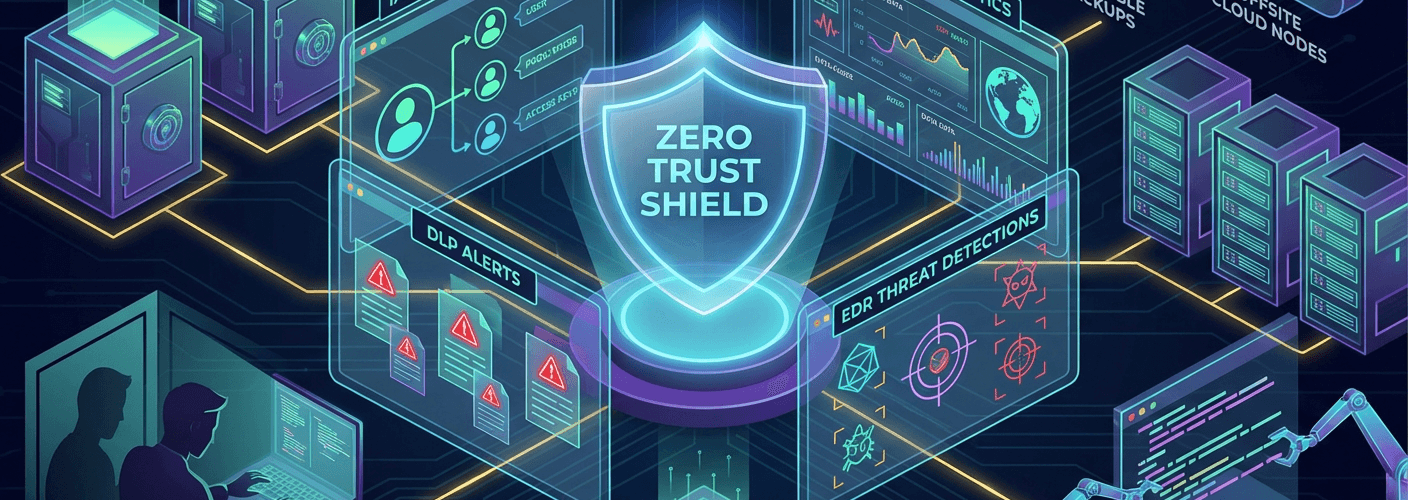
- Layered Security: A holistic security approach combining Identity and Access Management (IAM), Data Loss Prevention (DLP), Security Information & Event Management (SIEM), Endpoint Detection and Response (EDR), and Zero Trust principles is necessary to defend against sophisticated, AI-augmented threats.
- Proactive Adaptation: Businesses must prioritize continuous vigilance, education, and proactive adaptation to the evolving threat landscape, integrating security into digital transformation from the outset.
Table of Contents
- In Comedy of Errors, Men Accused of Wiping Gov Databases Turned to an AI Tool
- The Alarming Return of Convicted Offenders and the Lure of AI Assistance
- Expert Take: The Double-Edged Sword of AI
- The Pervasive Threat of Insider Actions and Supply Chain Vulnerabilities
- Database Integrity, Data Recovery, and Business Continuity
- Expert Take: The Gold Standard of Data Protection
- Bolstering Defenses: A Strategic Approach for Businesses
- The Path Forward: Vigilance, Education, and Proactive Security
- FAQs
- Conclusion
In Comedy of Errors, Men Accused of Wiping Gov Databases Turned to an AI Tool
The digital landscape is a double-edged sword, offering unprecedented opportunities for innovation and efficiency, yet simultaneously presenting complex challenges in cybersecurity and ethical technology use. A recent incident, making headlines for its almost unbelievable sequence of events, perfectly encapsulates this dichotomy: two contractors, previously convicted for similar offenses a decade ago, managed to secure government contracts again, only to allegedly wipe crucial government databases—and, startlingly, reportedly turned to an AI tool to assist in their nefarious acts. This “comedy of errors” is anything but humorous for the organizations involved, serving as a stark reminder for business professionals, entrepreneurs, and tech-forward leaders about the critical importance of robust vetting processes, advanced cybersecurity measures, and a proactive stance on AI ethics and insider threat mitigation.
This incident isn’t just a cautionary tale about human fallibility and administrative oversight; it’s a potent illustration of how modern technology, including increasingly accessible AI tools, can be weaponized if not properly understood and controlled. As businesses race towards digital transformation, automation, and AI integration, understanding the nuanced risks associated with these powerful tools is paramount. This article will dissect the implications of this incident, exploring how it underscores the persistent challenges of insider threats, the evolving nature of cybercrime with AI assistance, and the indispensable role of comprehensive cybersecurity strategies in safeguarding organizational integrity and operational continuity.
The Alarming Return of Convicted Offenders and the Lure of AI Assistance
The core of this unsettling narrative revolves around individuals with a documented history of malicious digital activity. The fact that these individuals, after being convicted of similar crimes a decade prior, were cleared to work on sensitive government projects again raises profound questions about background checks, contractor vetting, and the lifecycle of digital identities and access privileges. For any organization, but especially for those handling critical data, the trust placed in third-party contractors is immense. This trust, when misplaced, creates significant vulnerabilities that can be exploited with devastating consequences.
What makes this particular incident even more alarming is the alleged involvement of an AI tool. While the specific nature of the AI tool used by the perpetrators—whether it was an off-the-shelf generative AI, a specialized script-generation tool, or an internal system misused—remains a subject of intense scrutiny, its reported deployment highlights a critical evolving threat vector. AI’s ability to automate complex tasks, analyze vast datasets, and generate highly convincing content makes it an invaluable asset for legitimate business operations, from optimizing supply chains and enhancing customer service to accelerating software development. However, these very capabilities can be inverted to serve malicious purposes:
- Automating Malicious Tasks: AI can be trained to generate scripts for data deletion, modify system configurations, or create highly targeted phishing emails designed to bypass security filters, all at speeds and scales unachievable by human attackers alone.
- Obfuscation and Stealth: Advanced AI algorithms can help attackers analyze network traffic patterns, identify blind spots in security monitoring, and craft sophisticated evasion techniques, making detection significantly harder.
- Information Gathering and Exploitation: AI can quickly process publicly available information (OSINT) or even internal documentation (if accessible) to identify key vulnerabilities, predict human behaviors, or pinpoint critical systems for attack.
- Social Engineering Enhancement: Generative AI can produce highly convincing fake identities, elaborate pretexts, and persuasive communications, making social engineering attacks more effective and harder to detect.
The involvement of an AI tool in wiping government databases elevates the threat from a simple malicious act to a sophisticated cyber incident, forcing organizations to re-evaluate their defenses against a new generation of AI-augmented adversaries. This incident serves as a stark reminder that while AI offers immense potential for business efficiency and innovation, it also demands a renewed focus on AI governance, ethical use, and robust security frameworks to prevent its misuse.
Expert Take: The Double-Edged Sword of AI
“The alleged use of an AI tool in this database wiping incident underscores the dual-use nature of artificial intelligence. While AI is a powerful engine for progress and efficiency, its capabilities can be readily repurposed for nefarious activities. This necessitates a proactive approach to AI ethics and security, ensuring that as we integrate AI into our systems, we also build robust safeguards against its potential misuse by malicious actors, whether internal or external.”
— Dr. Anya Sharma, AI Ethicist and Cybersecurity Strategist
The Pervasive Threat of Insider Actions and Supply Chain Vulnerabilities
This incident provides a textbook example of an “insider threat”—a security risk that originates from within the targeted organization. While these individuals were contractors, their authorized access to government systems effectively made them insiders. Insider threats are notoriously difficult to detect and prevent because they often involve individuals who bypass traditional perimeter defenses due to their legitimate access rights. For businesses, this translates into a multifaceted challenge:
- Vetting and Background Checks: The failure to adequately vet contractors, especially those with previous convictions for similar offenses, is a glaring vulnerability. Businesses must implement stringent, continuous background checks and credential verification processes for all employees and third-party contractors with access to sensitive data or critical systems.
- Principle of Least Privilege (PoLP): Granting employees and contractors only the minimum access rights necessary to perform their job functions is fundamental. Over-privileged accounts are a common pathway for insider attacks. Regular audits of access rights are crucial.
- Segregation of Duties (SoD): No single individual should have enough privileges to complete a critical task entirely on their own. Implementing SoD ensures that multiple individuals are required for sensitive operations, creating checks and balances.
- Continuous Monitoring: Beyond initial vetting, continuous monitoring of user behavior, network activity, and system access is essential. Anomalous behavior, such as accessing unusual files, operating at unusual times, or attempting to delete large volumes of data, should trigger immediate alerts and investigations.
- Offboarding Procedures: A robust offboarding process that immediately revokes all access upon termination or contract conclusion is critical. This incident, where the alleged wiping occurred after their firing, highlights a significant lapse in this area.
Beyond insider threats, this case also shines a spotlight on supply chain security. As organizations increasingly rely on third-party vendors, cloud providers, and contractors, the security posture of these external entities becomes an extension of their own. A vulnerability in any part of the supply chain can cascade, exposing the entire ecosystem. Businesses must conduct thorough due diligence on all third-party partners, ensuring they adhere to stringent security standards and have robust incident response capabilities. Contractual agreements should clearly define security responsibilities, data protection clauses, and audit rights.
Database Integrity, Data Recovery, and Business Continuity
The alleged act of wiping government databases is a catastrophic event for any organization. It can lead to:
- Operational Paralysis: Loss of critical data can halt operations, making it impossible to serve customers, manage logistics, or process transactions.
- Financial Ruin: Data loss can result in significant financial penalties, regulatory fines, legal liabilities, and direct costs associated with recovery efforts.
- Reputational Damage: A major data loss event erodes public trust, damages brand reputation, and can lead to a long-term decline in customer confidence.
- Regulatory Non-Compliance: Many industries and geographies have strict data retention and protection regulations (e.g., GDPR, CCPA, HIPAA). Database wiping leads to immediate non-compliance, incurring severe penalties.
This incident underscores the absolute necessity of comprehensive data backup and recovery strategies. These are not merely IT tasks but fundamental business continuity requirements. Organizations must implement:
- Regular, Automated Backups: Critical databases should be backed up frequently, with multiple recovery points.
- Offsite and Immutable Backups: Backups should be stored offsite and, ideally, in an immutable format that cannot be altered or deleted, even by administrative accounts, to protect against sophisticated attacks like ransomware or malicious insiders.
- Disaster Recovery (DR) Plan: A well-tested DR plan outlines procedures for restoring data and systems in the event of a major outage or attack. Regular drills are crucial to ensure the plan’s effectiveness.
- Data Integrity Checks: Regularly verify the integrity of backups to ensure they are not corrupted and can indeed be restored successfully.
- Immutable Logs and Audit Trails: Maintain detailed, tamper-proof logs of all database access, modifications, and deletions. These logs are critical for forensic analysis, incident response, and accountability.
Expert Take: The Gold Standard of Data Protection
“In an era where data is the new oil, its integrity and availability are paramount. This incident powerfully reminds us that robust backup strategies—including immutable backups and rigorously tested disaster recovery plans—are not optional extras but the foundational pillars of business continuity and resilience. Organizations must invest in these measures as if their very existence depends on them, because often, it does.”
— Marcus Chen, Chief Information Security Officer (CISO) at TechSolutions Inc.
Bolstering Defenses: A Strategic Approach for Businesses
The incident serves as a critical learning opportunity for all businesses, emphasizing the need for a holistic and proactive approach to cybersecurity. Modern technology, AI, and digital tools, while driving unprecedented efficiency and innovation, also introduce new attack vectors that must be actively managed.
Here are key areas where businesses can enhance their operations and safeguard against similar threats:
- Digital Transformation with Security by Design: As businesses embark on digital transformation journeys, security must be integrated from the outset, not as an afterthought. This means incorporating security considerations into every stage of software development, system design, and cloud migration.
- AI Governance and Responsible AI: Develop clear policies for the ethical use of AI within the organization. This includes guidelines on data privacy, algorithmic transparency, bias mitigation, and preventing the misuse of AI tools. Employees must be educated on the risks associated with AI and how to identify suspicious AI-generated content or requests.
- Enhanced Financial Innovation Security: For fintech and other financially sensitive sectors, the stakes are even higher. Secure financial innovation requires robust encryption, multi-factor authentication, fraud detection systems (often AI-powered themselves), and immutable transaction ledgers.
- Operational Optimization with Zero Trust: Adopt a Zero Trust security model, which operates on the principle of “never trust, always verify.” Every user, device, and application attempting to access resources—whether internal or external—must be authenticated and authorized. This significantly limits the impact of compromised credentials or insider threats.
- Proactive Threat Intelligence: Stay informed about emerging threats, vulnerabilities, and attack methodologies, including those involving AI. Leverage threat intelligence feeds to anticipate potential attacks and strengthen defenses before they are exploited.
Comparison of Key Cybersecurity Defense Strategies
To navigate the complex threat landscape, businesses need a layered defense strategy. Here’s a comparison of critical cybersecurity tools and strategies that can help mitigate risks, including insider threats and AI-augmented attacks:
| Cybersecurity Strategy/Tool | Pros | Cons | Use Case Suitability |
|---|---|---|---|
| Identity and Access Management (IAM) | Centralized control over user identities and access. Enforces Principle of Least Privilege. Facilitates rapid access revocation during offboarding or incidents. Supports Multi-Factor Authentication (MFA). Reduces risk of unauthorized access. | Can be complex to implement and manage, especially in large, hybrid environments. Requires ongoing policy definition and auditing. Legacy systems may lack full integration capabilities. User experience can be impacted by stringent access controls if not well-designed. Does not inherently detect malicious actions by authorized users. | Essential for all organizations to manage who has access to what resources. Crucial for mitigating insider threats, ensuring compliance (e.g., GDPR, HIPAA), and securing cloud environments. Particularly vital for organizations with high staff turnover or extensive contractor networks. |
| Data Loss Prevention (DLP) | Prevents sensitive data from leaving the organization’s control (e.g., via email, USB drives, cloud uploads). Identifies and classifies sensitive data across endpoints, networks, and cloud. Helps meet compliance requirements. Can detect and block accidental or malicious data exfiltration. | High false-positive rates can disrupt legitimate business operations. Requires significant effort to accurately classify data and define policies. Can be resource-intensive to deploy and manage. Does not prevent data from being accessed or deleted within authorized systems if the user has legitimate access. Focuses on outflow, not internal malicious actions like deletion or modification within the system. | Ideal for organizations handling highly sensitive data (PII, financial, intellectual property). Suited for preventing accidental data breaches and deterring malicious insiders from exfiltrating data. Complements IAM by focusing on what data leaves, not just who accessed it. |
| Security Information & Event Mgmt (SIEM) | Centralizes security logs from across the IT infrastructure. Provides real-time threat detection and alerting. Correlates events to identify complex attack patterns. Facilitates forensic investigations and compliance reporting. Can detect anomalous user behavior and system changes. | Can be very complex and expensive to implement and maintain. Requires skilled analysts to interpret alerts and configure rules effectively. High volume of alerts can lead to “alert fatigue.” Effectiveness depends heavily on proper configuration and integration with all relevant data sources. Does not directly prevent an attack, but rather detects and alerts. | Indispensable for medium to large enterprises, highly regulated industries, and organizations facing sophisticated threats (e.g., advanced persistent threats, insider attacks). Essential for comprehensive visibility into security posture, incident response, and compliance auditing. |
| Endpoint Detection and Response (EDR) | Monitors and records all activities on endpoints (laptops, servers). Detects and investigates suspicious behaviors that bypass traditional antivirus. Provides deep visibility into attack progression. Enables rapid response and remediation actions (e.g., isolating endpoints, killing processes). | Can be resource-intensive on endpoints. Requires ongoing tuning to minimize false positives and maximize detection rates. May require skilled security analysts to fully leverage its capabilities. Focuses on endpoints, not necessarily network or cloud-level threats without broader integration. | Crucial for protecting user workstations and servers from advanced malware, ransomware, and fileless attacks. Highly effective against sophisticated insider threats operating on specific machines. Valuable for organizations with mobile workforces or distributed IT environments. Works well in conjunction with SIEM for comprehensive threat visibility. |
| Data Backup and Disaster Recovery | Ensures business continuity by enabling restoration of data and systems after incidents. Protects against accidental deletion, hardware failures, cyberattacks (like ransomware and database wiping). Can incorporate immutable backups for enhanced resilience. | Requires significant storage infrastructure and careful planning. Regular testing is essential but often overlooked. Recovery times (RTO) and data loss (RPO) can vary greatly depending on implementation. Can be expensive if robust solutions with minimal RTO/RPO are desired. Not a preventative measure against initial attack, but a recovery strategy. | Absolutely critical for all businesses, regardless of size or industry. Fundamental for mitigating the impact of any data loss event, whether from malicious insiders, external attacks, natural disasters, or human error. Essential for regulatory compliance and long-term business resilience. |
This comparison table highlights that no single solution is a silver bullet. A layered and integrated approach, combining these strategies, provides the most robust defense against a diverse range of threats, including the unique challenges posed by insider threats leveraging advanced tools like AI.
iOS 27 Prioritizes Performance and AI Innovation
The Path Forward: Vigilance, Education, and Proactive Security
The incident of convicted contractors allegedly using an AI tool to wipe government databases is a sobering narrative for the modern digital age. It underscores the critical need for organizations to move beyond reactive security measures and embrace a posture of continuous vigilance, robust procedural enforcement, and proactive technological adaptation.
For business professionals, entrepreneurs, and tech-forward readers, the takeaways are clear:
- Prioritize People and Processes: Technology alone is insufficient. Strong vetting, ongoing monitoring of insider activities, clear offboarding procedures, and an organizational culture that values security are paramount.
- Embrace AI Responsibly: Acknowledge AI’s potential for both good and harm. Develop internal guidelines for ethical AI use, invest in AI-powered security solutions, and educate employees on identifying AI-augmented threats.
- Invest in Resilience: Data backup, immutable storage, and well-tested disaster recovery plans are non-negotiable foundations for business continuity.
- Adopt a Zero Trust Philosophy: Assume no user or device can be trusted implicitly. Verify every access request and enforce the principle of least privilege.
- Stay Informed and Adapt: The threat landscape is constantly evolving, with new tools and techniques emerging regularly. Continuous learning, threat intelligence, and regular security audits are vital to staying ahead of adversaries.
FAQs
What is an “insider threat”?
An insider threat refers to a security risk that originates from within the targeted organization. This can involve current or former employees, contractors, or business associates who have legitimate access to an organization’s systems or data and misuse that access, either intentionally or unintentionally, to cause harm.
How can AI be misused in cyberattacks?
AI can be weaponized for malicious purposes in several ways, including automating malicious tasks (like generating scripts for data deletion or phishing emails), obfuscating attack techniques, rapidly gathering information for exploitation, and enhancing social engineering attacks by creating convincing fake identities or pretexts.
Why are immutable backups important?
Immutable backups are crucial because they are stored in a format that cannot be altered, overwritten, or deleted once created, even by administrators. This protects critical data against sophisticated cyberattacks, such as ransomware or malicious insiders, ensuring that a clean, uncompromised copy of data is always available for recovery.
What is the Principle of Least Privilege?
The Principle of Least Privilege (PoLP) is a security concept where users, programs, or processes are granted only the minimum access rights necessary to perform their legitimate functions. This minimizes the potential damage from a compromised account or an insider threat, as even if an account is breached, its access to sensitive systems is limited.
How can businesses protect against sophisticated cyber threats?
Protection against sophisticated cyber threats requires a holistic, layered approach. Key strategies include robust contractor vetting, implementing a Zero Trust model, continuous monitoring of user behavior, comprehensive data backup and disaster recovery plans (especially immutable backups), strong Identity and Access Management (IAM), Data Loss Prevention (DLP), Security Information & Event Management (SIEM), and proactive AI governance.
Conclusion
The “comedy of errors” incident involving convicted contractors allegedly using an AI tool to wipe government databases serves as a critical wake-up call for every organization. It vividly illustrates the converging challenges of human fallibility, administrative lapses, and the emerging risks associated with advanced technology like AI. This event underscores that digital transformation, while offering immense opportunities, must be underpinned by an unwavering commitment to security by design, ethical AI governance, and continuous vigilance.
For businesses navigating this complex digital landscape, the path forward is clear: prioritize robust vetting and insider threat mitigation, embrace AI responsibly with strong ethical frameworks, invest in non-negotiable data resilience strategies, adopt a Zero Trust philosophy, and remain proactive in adapting to an ever-evolving threat landscape. By learning from such incidents and strategically fortifying their defenses, businesses can safeguard their critical assets, maintain stakeholder trust, and ensure long-term operational continuity in an increasingly interconnected and AI-influenced world.